
 Zarifi may not have been the only Iranian security official killed during the confrontation.
Iran International reported that Ahmad Harati Zeraati, a member of government security forces, was wounded during the fighting and subsequently died after being taken for medical treatment.
IranWire, citing the Baloch rights organisation Haalvsh, identified Zeraati as an intelligence official associated with the Sajjad Operational Base.
Haalvsh also reported that at least 13 other military and security personnel were seriously wounded.
There has been no independent confirmation of that casualty figure, and Iranian authorities had not publicly provided a complete account of security-force casualties when initial reports emerged.
This means the confirmed element across multiple sources remains Zarifi's death, while reports concerning the number and identities of additional casualties should be treated as developing information.
Who was Hossein Zarifi?
Zarifi held the rank of brigadier general and commanded the Shahid Sajjad Operational Base in Saravan.
Reports citing Iranian sources said he had spent more than a decade serving in Sistan and Baluchestan.
The IRGC portrayed Zarifi as a commander who participated directly in military operations with personnel under his command.
His funeral is scheduled to take place in Saravan on Friday, September 25, according to statements attributed to the IRGC.
His death is significant because senior operational commanders play an important role in Iran's efforts to counter armed groups operating across the country's southeastern border regions.
Armed group not conclusively identified
The identity of the fighters involved in Wednesday's confrontation remained unclear in the initial official accounts.
Iranian authorities referred to them as terrorists and in some accounts described the cell as being backed by Iran's enemies.
However, no specific organisation was publicly identified in the IRGC's initial announcement of Zarifi's death.
Several armed organisations have operated in Sistan and Baluchestan over the years, including Jaish al-Adl, a Sunni Baloch militant organisation that has previously carried out attacks against Iranian security forces.
The presence of such groups in the region does not establish responsibility for Wednesday's clash.
No organisation had publicly claimed responsibility for the fighting in the initial reports reviewed for this article.
Similarly, claims from Iranian authorities concerning foreign support for armed groups operating in the province should be treated as allegations unless independently substantiated.
Sistan and Baluchestan remains security flashpoint
Sistan and Baluchestan has long presented security challenges for Tehran.
The vast province borders both Pakistan and Afghanistan and has experienced attacks by separatist and militant organisations, confrontations with security forces and cross-border criminal activity.
It is also home to a large ethnic Baloch population and has a substantial Sunni Muslim community in predominantly Shiite Iran.
Security operations have intensified periodically following attacks on Iranian police, border guards and Revolutionary Guard personnel.
Wednesday's confrontation came less than two weeks after another deadly security operation in Saravan.
On September 12, the IRGC said Iranian security forces targeted another armed cell in the area. According to the IRGC's account, four suspected militants and three Iranian intelligence and security personnel were killed.
Weapons, ammunition and explosives were reportedly recovered during that operation.
Questions remain over Wednesday's clash
Despite confirmation of Zarifi's death, several aspects of Wednesday's fighting remain unclear.
Iranian authorities have not conclusively identified the armed organisation involved, and there is no independent verification yet of the government's claim that five fighters were killed.
Reports of numerous additional casualties among Iranian security personnel also require further verification.
What has been established through multiple reports and the IRGC's own announcement is that Zarifi was killed during an armed operation in Saravan and that fighting occurred between Iranian forces and unidentified armed men.
His death comes as Iranian authorities continue security operations across Sistan and Baluchestan and attempt to contain armed groups operating in one of the country's most volatile border regions.
Further statements from the IRGC, local authorities or any organisation claiming involvement could provide additional information about the scale of the confrontation and the group responsible.
Zarifi may not have been the only Iranian security official killed during the confrontation.
Iran International reported that Ahmad Harati Zeraati, a member of government security forces, was wounded during the fighting and subsequently died after being taken for medical treatment.
IranWire, citing the Baloch rights organisation Haalvsh, identified Zeraati as an intelligence official associated with the Sajjad Operational Base.
Haalvsh also reported that at least 13 other military and security personnel were seriously wounded.
There has been no independent confirmation of that casualty figure, and Iranian authorities had not publicly provided a complete account of security-force casualties when initial reports emerged.
This means the confirmed element across multiple sources remains Zarifi's death, while reports concerning the number and identities of additional casualties should be treated as developing information.
Who was Hossein Zarifi?
Zarifi held the rank of brigadier general and commanded the Shahid Sajjad Operational Base in Saravan.
Reports citing Iranian sources said he had spent more than a decade serving in Sistan and Baluchestan.
The IRGC portrayed Zarifi as a commander who participated directly in military operations with personnel under his command.
His funeral is scheduled to take place in Saravan on Friday, September 25, according to statements attributed to the IRGC.
His death is significant because senior operational commanders play an important role in Iran's efforts to counter armed groups operating across the country's southeastern border regions.
Armed group not conclusively identified
The identity of the fighters involved in Wednesday's confrontation remained unclear in the initial official accounts.
Iranian authorities referred to them as terrorists and in some accounts described the cell as being backed by Iran's enemies.
However, no specific organisation was publicly identified in the IRGC's initial announcement of Zarifi's death.
Several armed organisations have operated in Sistan and Baluchestan over the years, including Jaish al-Adl, a Sunni Baloch militant organisation that has previously carried out attacks against Iranian security forces.
The presence of such groups in the region does not establish responsibility for Wednesday's clash.
No organisation had publicly claimed responsibility for the fighting in the initial reports reviewed for this article.
Similarly, claims from Iranian authorities concerning foreign support for armed groups operating in the province should be treated as allegations unless independently substantiated.
Sistan and Baluchestan remains security flashpoint
Sistan and Baluchestan has long presented security challenges for Tehran.
The vast province borders both Pakistan and Afghanistan and has experienced attacks by separatist and militant organisations, confrontations with security forces and cross-border criminal activity.
It is also home to a large ethnic Baloch population and has a substantial Sunni Muslim community in predominantly Shiite Iran.
Security operations have intensified periodically following attacks on Iranian police, border guards and Revolutionary Guard personnel.
Wednesday's confrontation came less than two weeks after another deadly security operation in Saravan.
On September 12, the IRGC said Iranian security forces targeted another armed cell in the area. According to the IRGC's account, four suspected militants and three Iranian intelligence and security personnel were killed.
Weapons, ammunition and explosives were reportedly recovered during that operation.
Questions remain over Wednesday's clash
Despite confirmation of Zarifi's death, several aspects of Wednesday's fighting remain unclear.
Iranian authorities have not conclusively identified the armed organisation involved, and there is no independent verification yet of the government's claim that five fighters were killed.
Reports of numerous additional casualties among Iranian security personnel also require further verification.
What has been established through multiple reports and the IRGC's own announcement is that Zarifi was killed during an armed operation in Saravan and that fighting occurred between Iranian forces and unidentified armed men.
His death comes as Iranian authorities continue security operations across Sistan and Baluchestan and attempt to contain armed groups operating in one of the country's most volatile border regions.
Further statements from the IRGC, local authorities or any organisation claiming involvement could provide additional information about the scale of the confrontation and the group responsible.War
Senior IRGC Commander Hossein Zarifi Killed in Armed Clash Near Iran-Pakistan Border
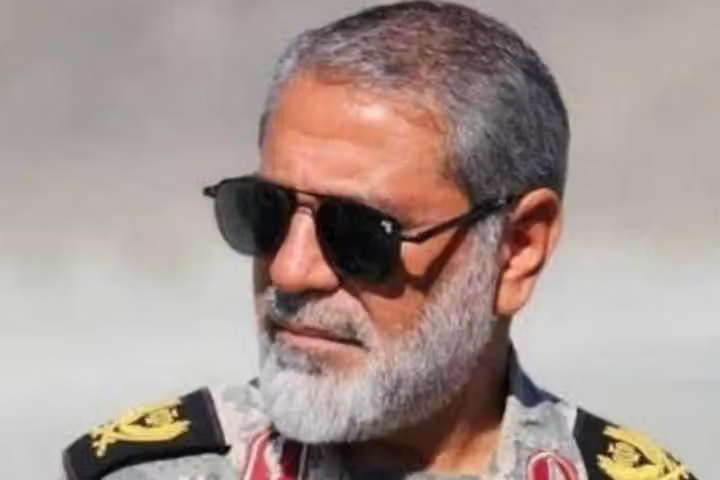
A senior commander of Iran's Islamic Revolutionary Guard Corps has been killed during fighting with armed men in the country's southeastern Sistan and Baluchestan province, according to Iranian authorities.
Brigadier General Hossein Zarifi, commander of the IRGC's Shahid Sajjad Operational Base in Saravan, died during a security operation on Wednesday, September 23, in an area close to Iran's border with Pakistan.
The Quds Regional Headquarters of the IRGC Ground Forces confirmed Zarifi's death, saying the commander was participating in an operation against armed fighters when he was killed.
Iranian authorities described the opposing fighters as terrorists but did not initially identify the organisation to which they allegedly belonged.
The incident adds to a series of violent confrontations between Iranian security forces and armed groups in Sistan and Baluchestan, a strategically important province bordering Pakistan and Afghanistan.
Fighting reported in Saravan
The confrontation was reported around the Jihadabad area of Saravan.
According to accounts carried by Iranian media, a joint security force involving the IRGC, the Intelligence Ministry and police targeted a location where authorities believed an armed cell was operating.
Iranian authorities said intelligence had indicated that members of the group were preparing attacks.
Fighting broke out during the operation.
The IRGC later announced that Zarifi had been killed while participating in the operation alongside forces under his command.
Iranian authorities also said five members of the armed group were killed and several others arrested.
Those casualty figures had not been independently confirmed at the time of reporting.
Authorities also reported recovering weapons and ammunition from the location.
Reports suggest additional Iranian casualties
Zarifi may not have been the only Iranian security official killed during the confrontation.
Iran International reported that Ahmad Harati Zeraati, a member of government security forces, was wounded during the fighting and subsequently died after being taken for medical treatment.
IranWire, citing the Baloch rights organisation Haalvsh, identified Zeraati as an intelligence official associated with the Sajjad Operational Base.
Haalvsh also reported that at least 13 other military and security personnel were seriously wounded.
There has been no independent confirmation of that casualty figure, and Iranian authorities had not publicly provided a complete account of security-force casualties when initial reports emerged.
This means the confirmed element across multiple sources remains Zarifi's death, while reports concerning the number and identities of additional casualties should be treated as developing information.
Who was Hossein Zarifi?
Zarifi held the rank of brigadier general and commanded the Shahid Sajjad Operational Base in Saravan.
Reports citing Iranian sources said he had spent more than a decade serving in Sistan and Baluchestan.
The IRGC portrayed Zarifi as a commander who participated directly in military operations with personnel under his command.
His funeral is scheduled to take place in Saravan on Friday, September 25, according to statements attributed to the IRGC.
His death is significant because senior operational commanders play an important role in Iran's efforts to counter armed groups operating across the country's southeastern border regions.
Armed group not conclusively identified
The identity of the fighters involved in Wednesday's confrontation remained unclear in the initial official accounts.
Iranian authorities referred to them as terrorists and in some accounts described the cell as being backed by Iran's enemies.
However, no specific organisation was publicly identified in the IRGC's initial announcement of Zarifi's death.
Several armed organisations have operated in Sistan and Baluchestan over the years, including Jaish al-Adl, a Sunni Baloch militant organisation that has previously carried out attacks against Iranian security forces.
The presence of such groups in the region does not establish responsibility for Wednesday's clash.
No organisation had publicly claimed responsibility for the fighting in the initial reports reviewed for this article.
Similarly, claims from Iranian authorities concerning foreign support for armed groups operating in the province should be treated as allegations unless independently substantiated.
Sistan and Baluchestan remains security flashpoint
Sistan and Baluchestan has long presented security challenges for Tehran.
The vast province borders both Pakistan and Afghanistan and has experienced attacks by separatist and militant organisations, confrontations with security forces and cross-border criminal activity.
It is also home to a large ethnic Baloch population and has a substantial Sunni Muslim community in predominantly Shiite Iran.
Security operations have intensified periodically following attacks on Iranian police, border guards and Revolutionary Guard personnel.
Wednesday's confrontation came less than two weeks after another deadly security operation in Saravan.
On September 12, the IRGC said Iranian security forces targeted another armed cell in the area. According to the IRGC's account, four suspected militants and three Iranian intelligence and security personnel were killed.
Weapons, ammunition and explosives were reportedly recovered during that operation.
Questions remain over Wednesday's clash
Despite confirmation of Zarifi's death, several aspects of Wednesday's fighting remain unclear.
Iranian authorities have not conclusively identified the armed organisation involved, and there is no independent verification yet of the government's claim that five fighters were killed.
Reports of numerous additional casualties among Iranian security personnel also require further verification.
What has been established through multiple reports and the IRGC's own announcement is that Zarifi was killed during an armed operation in Saravan and that fighting occurred between Iranian forces and unidentified armed men.
His death comes as Iranian authorities continue security operations across Sistan and Baluchestan and attempt to contain armed groups operating in one of the country's most volatile border regions.
Further statements from the IRGC, local authorities or any organisation claiming involvement could provide additional information about the scale of the confrontation and the group responsible.
Zarifi may not have been the only Iranian security official killed during the confrontation.
Iran International reported that Ahmad Harati Zeraati, a member of government security forces, was wounded during the fighting and subsequently died after being taken for medical treatment.
IranWire, citing the Baloch rights organisation Haalvsh, identified Zeraati as an intelligence official associated with the Sajjad Operational Base.
Haalvsh also reported that at least 13 other military and security personnel were seriously wounded.
There has been no independent confirmation of that casualty figure, and Iranian authorities had not publicly provided a complete account of security-force casualties when initial reports emerged.
This means the confirmed element across multiple sources remains Zarifi's death, while reports concerning the number and identities of additional casualties should be treated as developing information.
Who was Hossein Zarifi?
Zarifi held the rank of brigadier general and commanded the Shahid Sajjad Operational Base in Saravan.
Reports citing Iranian sources said he had spent more than a decade serving in Sistan and Baluchestan.
The IRGC portrayed Zarifi as a commander who participated directly in military operations with personnel under his command.
His funeral is scheduled to take place in Saravan on Friday, September 25, according to statements attributed to the IRGC.
His death is significant because senior operational commanders play an important role in Iran's efforts to counter armed groups operating across the country's southeastern border regions.
Armed group not conclusively identified
The identity of the fighters involved in Wednesday's confrontation remained unclear in the initial official accounts.
Iranian authorities referred to them as terrorists and in some accounts described the cell as being backed by Iran's enemies.
However, no specific organisation was publicly identified in the IRGC's initial announcement of Zarifi's death.
Several armed organisations have operated in Sistan and Baluchestan over the years, including Jaish al-Adl, a Sunni Baloch militant organisation that has previously carried out attacks against Iranian security forces.
The presence of such groups in the region does not establish responsibility for Wednesday's clash.
No organisation had publicly claimed responsibility for the fighting in the initial reports reviewed for this article.
Similarly, claims from Iranian authorities concerning foreign support for armed groups operating in the province should be treated as allegations unless independently substantiated.
Sistan and Baluchestan remains security flashpoint
Sistan and Baluchestan has long presented security challenges for Tehran.
The vast province borders both Pakistan and Afghanistan and has experienced attacks by separatist and militant organisations, confrontations with security forces and cross-border criminal activity.
It is also home to a large ethnic Baloch population and has a substantial Sunni Muslim community in predominantly Shiite Iran.
Security operations have intensified periodically following attacks on Iranian police, border guards and Revolutionary Guard personnel.
Wednesday's confrontation came less than two weeks after another deadly security operation in Saravan.
On September 12, the IRGC said Iranian security forces targeted another armed cell in the area. According to the IRGC's account, four suspected militants and three Iranian intelligence and security personnel were killed.
Weapons, ammunition and explosives were reportedly recovered during that operation.
Questions remain over Wednesday's clash
Despite confirmation of Zarifi's death, several aspects of Wednesday's fighting remain unclear.
Iranian authorities have not conclusively identified the armed organisation involved, and there is no independent verification yet of the government's claim that five fighters were killed.
Reports of numerous additional casualties among Iranian security personnel also require further verification.
What has been established through multiple reports and the IRGC's own announcement is that Zarifi was killed during an armed operation in Saravan and that fighting occurred between Iranian forces and unidentified armed men.
His death comes as Iranian authorities continue security operations across Sistan and Baluchestan and attempt to contain armed groups operating in one of the country's most volatile border regions.
Further statements from the IRGC, local authorities or any organisation claiming involvement could provide additional information about the scale of the confrontation and the group responsible.Continue with Tokenpress
Open Tokenpress to comment, contact the creator or send a tip.